Projects with this topic
-
As environmental change accelerates in the Anthropocene, a central challenge in evolutionary biology is understanding how populations respond to novel and rapidly changing conditions. Adaptation underpins whether species can persist and diverge under increasingly variable selective pressures. While adaptive potential is often inferred from phenotypic change or standing genetic variation, it remains unclear what determines the evolutionary “fuel” that enables sustained response. Using Arabidopsis species as model systems, this thesis examines the genetic basis of adaptation and how variation is generated and structured across biological scales, from life-history traits to gene expression and genomic interactions, with a particular focus on how genetic architecture shapes the pace and predictability of evolutionary change.
Together, this work conceptualises adaptive potential as an emergent population-level property arising from interactions among ecological traits, genetic architecture, molecular regulation, and environmental context. Adaptive potential depends not on the amount of variation present, but on its structure, heritability, and exposure to selection across evolutionary timescales.
Updated -
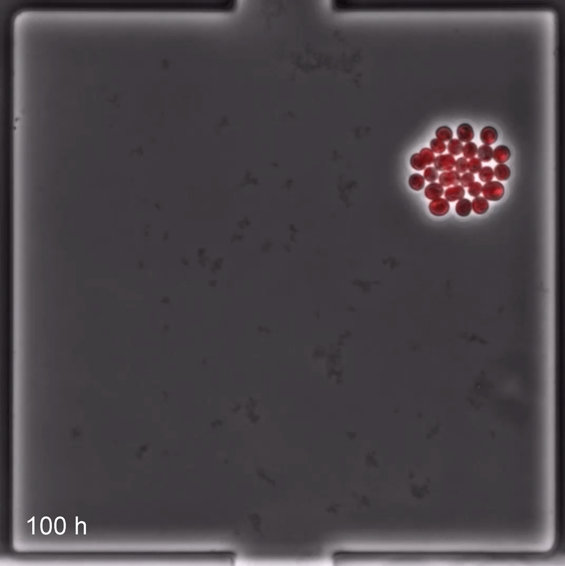
In our effort to construct a minimal endosymbiotic metabolism in cyanobacteria we investigated the yet understudied effects of glycogen deficiency on the diurnal transcriptome and metabolome of Synechocystis. We found that cells are maladjusted to night-day transitions especially, caused by a nocturnal ATP crisis and extensive metabolic rebalancing to maintain cell viability. Among redox imbalances and evidence of carbon starvation, this includes altered regulation of the cell cycle leading to desynchronised division. This indicates that host control over the emerging endosymbiont is an immediate consequence of glycogen storage loss, and could enable further integration of the bacterial partner during organellogenesis.
Updated -
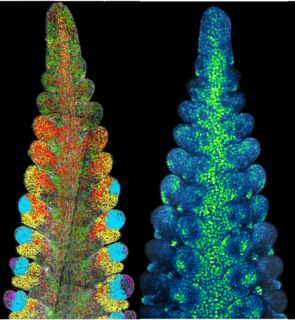
Early patterning of organ primordia during barley meristem development uncovered by imputation of gene expression at single cell level.
Updated