Explore ARCs
-
This ARC contains high-quality, chromosome-level genome assemblies for nine Thai cultivars of cassava (Manihot esculenta) and one wild relative, Manihot glaziovii. Generated as part of the CASSAVASTORE project, this resource was created to address the limited availability of genomic resources for diverse cassava ecotypes from Thailand.
Updated -
Updated
-
Timo Mühlhaus / ArcPrototype
Creative Commons Attribution 4.0 InternationalA prototypic ARC that implements all specification standards accordingly
Updated -
SFB1535_MibiNet / Witting_et_al_Lab_on_chip_2025
Creative Commons Attribution 4.0 InternationalQuantification of cell growth is central to any study of photoautotrophic microorganisms. However, cellular self-shading and limited CO2 control in conventional photobioreactors lead to heterogeneous conditions that obscure distinct correlations between the environment and cellular physiology. Here we present a microfluidic cultivation platform that enables precise analysis of cyanobacterial growth with spatio-temporal resolution. Since cyanobacteria are cultivated in monolayers, cellular self-shading does not occur, allowing homogeneous illumination and precise knowledge of the photon-flux density at single-cell resolution. A single chip contains multiple channels, each connected to several hundred growth chambers. In combination with an externally applied light gradient, this setup enables high-throughput multi-parameter analysis in short time. In addition, the multilayered microfluidic design allows continuous perfusion of defined gas mixtures. Transversal CO2 diffusion across the intermediate polydimethylsiloxane membrane results in homogeneous CO2 supply, with a unique exchange-surface to cultivation-volume ratio. Three cyanobacterial model strains were examined under various, static and dynamic environmental conditions. Phase-contrast and chlorophyll fluorescence images were recorded by automated time-lapse microscopy. Deep-learning trained cell segmentation was used to efficiently analyse large image stacks, thereby generating statistically reliable data. Cell division was highly synchronized, and growth was robust under continuous illumination but stopped rapidly upon initiating dark phases. CO2-Limitation, often a limiting factor in photobioreactors, was only observed when the device was operated under reduced CO2 between 50 and 0 ppm. Here we provide comprehensive and precise data on cyanobacterial growth at single-cell resolution, accessible for further growth studies and modeling.
Updated -
Updated
-
ARC_templates / Genomics_ARC
Creative Commons Attribution 4.0 InternationalUpdated -
ARC_templates / ARC
Creative Commons Attribution 4.0 InternationalUpdated -
Updated
-
Mirror of GitHub repository for DataPLANT
Updated -
HHU Institute of Plant Genetics / Lan_2025_Ppd-H1
Creative Commons Attribution Non Commercial No Derivatives 4.0 InternationalPPD-H1 Improves Stress Resistance and Energy Metabolism to Boost Spike Fertility under High Ambient Temperatures
Updated -
Updated
-
HHU Plant Biochemistry / Annunziata-2025-JXB
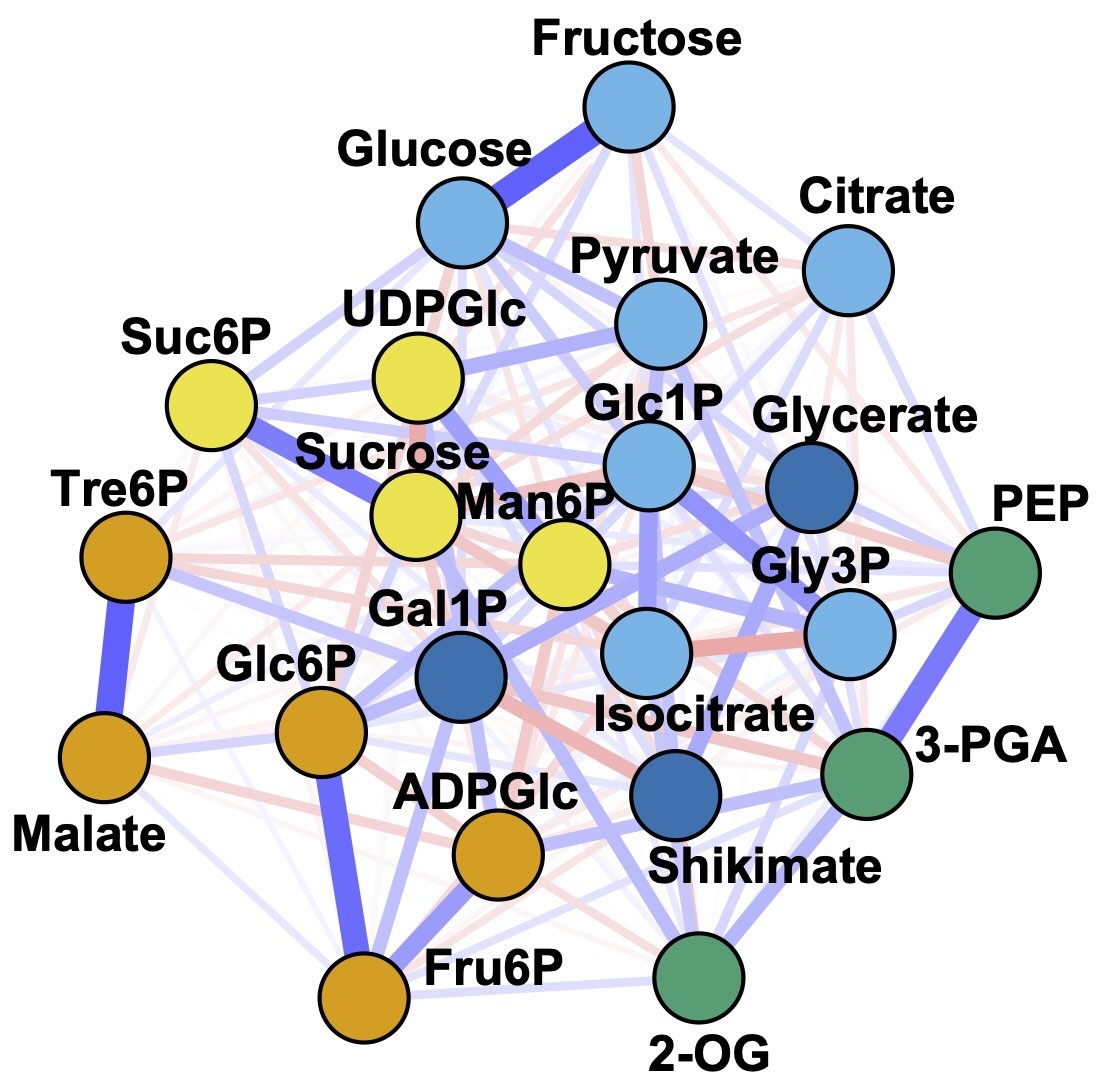
Creative Commons Attribution 4.0 InternationalThe sucrose:trehalose 6-phosphate nexus is conserved in flowering plants with different phloem loading and carbon storage strategies
Updated -
Updated
-
Usadellab / PGAsEffects
Creative Commons Attribution 4.0 InternationalThis research investigates the effects of potato glycoalkaloids (PGAs), α-solanine and α-chaconine, on growth and survival of plant pathogens and beneficial organisms from different biological groups.
Updated -
Caroline Ott / RatioLFQ
Creative Commons Attribution 4.0 InternationalUpdated -
HHU Institute of Plant Genetics / Hordeum-vulgare-ft1-RNAseq
Creative Commons Attribution 4.0 InternationalThe effect of FLOWERING LOCUS T1 (FT1) on the barley reproductive development
Updated -
Lu Wang / euk_metabarcoding_body_size
Creative Commons Attribution 4.0 InternationalUpdated