Explore ARCs
-
CEPLAS / MicrobialArmsRace
GNU General Public License v3.0 or laterUpdated -
Jinyi Zhu / MicrobialArmsRace
GNU General Public License v3.0 or laterUpdated -
HHU Institute of Plant Genetics / AnnualPerennialTraitSyndromes
Creative Commons Attribution 4.0 InternationalUpdated -
SNP2Prot / public / Ayash2026_Spatial_Proteomics
Creative Commons Attribution 4.0 InternationalUpdated -
This is an updated and slimmed-down version of a published ARC (https://doi.org/10.5447/ipk/2025/3) to showcase how to represent MIAPPE v1.2 in the ARC framework.
Updated -
MAdLand / LD Plasma membrane contact site conserved across Angiosperm Lineage
Creative Commons Attribution 4.0 InternationalIn seed plants, a tethering complex of two proteins, SEED LIPID DROPLET PROTEIN (SLDP) and LIPID DROPLET PLASMA MEMBRANE ADAPTOR (LIPA), binds lipid droplets (LDs) to the plasma membrane (PM). While the physiological function remains obscure, the conservation of the process is strong. The tethering of LDs can be observed broadly in a variety of seed plants seedling tissues. Interestingly a tethering might not be limited to the PM and could be associated with other organelles in other plants. Here, we show that LIPA and SLDP have emerged in the early period of land plant evolution likely before the emerging seed plants became dominant. They are, however, most prominently conserved in seed plants and their homologs share the tethering function in ectopic expression systems. This interaction is robust and can even be functional across taxon boundaries. The evolution of a LD PM tether in that significant time point also puts the LD in focus of land plant evolution. The involvement of LDs in conquest of terrestrial ecosystems and the studying thereof can give valuable insight in physiological processes that made early terrestrialization events possible. Further studies need to evaluate the function of the discovered homologs in non-seed plants.
Updated -
This project characterizes the genomic integrity of Escherichia coli K-12 through a comprehensive workflow spanning bacterial cultivation, DNA extraction, library preparation, Illumina sequencing, and bioinformatic analysis. The integrated approach ensures high-quality genome assemblies consistent with the reference strain.
Updated -
As environmental change accelerates in the Anthropocene, a central challenge in evolutionary biology is understanding how populations respond to novel and rapidly changing conditions. Adaptation underpins whether species can persist and diverge under increasingly variable selective pressures. While adaptive potential is often inferred from phenotypic change or standing genetic variation, it remains unclear what determines the evolutionary “fuel” that enables sustained response. Using Arabidopsis species as model systems, this thesis examines the genetic basis of adaptation and how variation is generated and structured across biological scales, from life-history traits to gene expression and genomic interactions, with a particular focus on how genetic architecture shapes the pace and predictability of evolutionary change.
Together, this work conceptualises adaptive potential as an emergent population-level property arising from interactions among ecological traits, genetic architecture, molecular regulation, and environmental context. Adaptive potential depends not on the amount of variation present, but on its structure, heritability, and exposure to selection across evolutionary timescales.
Updated -
A template ARC for transcriptomics RNA-Seq generated data.
Updated -
HHU Institute of Plant Genetics / Haraldsson 2026 - Hordeum erectifolium Genome
Creative Commons Attribution 4.0 InternationalA chromosome-scale genome assembly of Hordeum erectifolium: genomic, transcriptomic and anatomical adaptations to drought in a wild barley relative
Updated -
Project Title: [Your Project Title] Abstract
[Provide a concise summary of your research project.]
Investigators [Name 1, Affiliation 1] [Name 2, Affiliation 2] ... Funding[List funding sources and grant numbers.]
Project Description[Provide a detailed description of the research, including background, objectives, and methodology.]
Data Overview[Describe the types of data generated in this project.]
ARC StructureThis ARC is organized as follows:
Studies: Each study represents a specific experiment within the project. Assays: Each assay represents a specific technical analysis performed within a study. Studies Study 1: Descriptive Study Title 1 Study 2: Descriptive Study Title 2 ... LicenseCC BY 4.0
Citations[List relevant publications or datasets.]
Updated -
Updated
-
Usadellab / Camellia_sinensis_genomics
Creative Commons Attribution 4.0 InternationalPangenome of Camellia sinensis
Updated -
Usadellab / Metabolights338_ARC
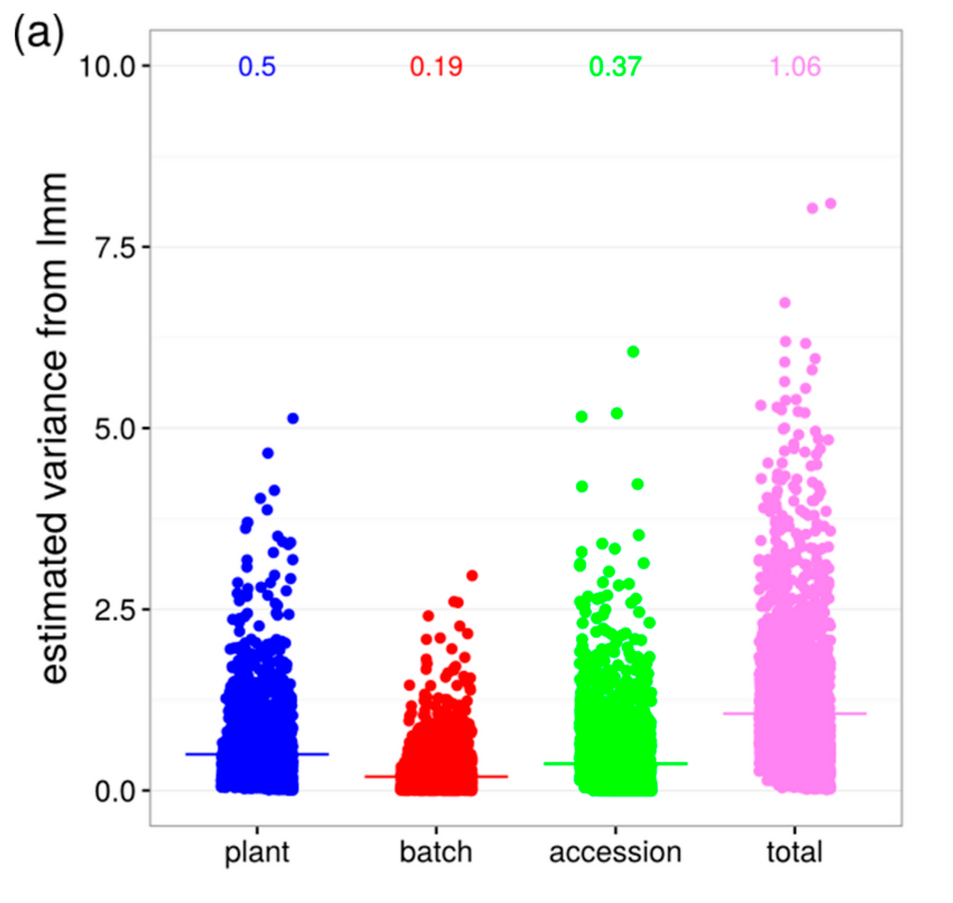
Creative Commons Attribution 4.0 InternationalThis ARC is based on the research of Mönchgesang et al. 2016, who performed a metabolite profiling of 19 Arabidopsis thaliana accessions. The natural variability of root metabolic patterns was analyzed between different accessions, with the result that plant-to-plant variability is greater than natural variation between accessions and non-biological variation between experimental batches.
Updated -
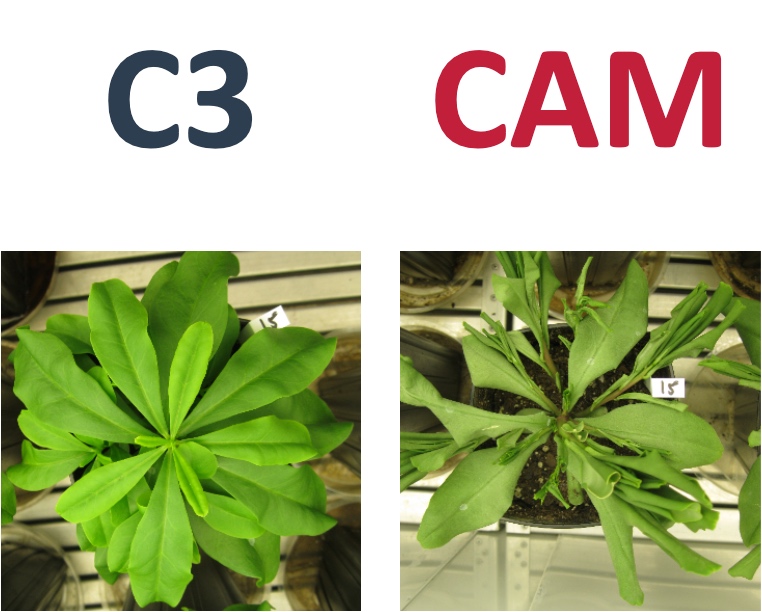
Dominik Brilhaus / Facultative CAM in Talinum
Creative Commons Attribution 4.0 InternationalReversible Burst of Transcriptional Changes during Induction of Crassulacean Acid Metabolism in Talinum triangulare.
Updated -
HHU Institute of Plant Genetics / Buchmann_2025_GP-rapid
Creative Commons Attribution 4.0 InternationalGP-rapid, a newly developed fast-cycling barley genotype, reduces generation time by 25% while remaining amenable to transformation, advancing functional genomic studies in barley.
Updated -
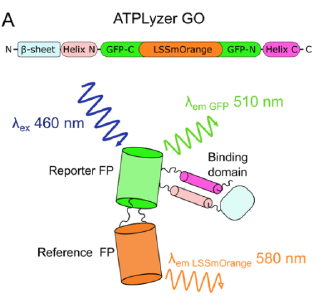
SFB1535_MibiNet / 2026_ATPLyzer
Creative Commons Attribution 4.0 InternationalATPLyzer – An advanced ratiometric multi-colour biosensor for long-term monitoring of 1 ATP dynamics
Updated -
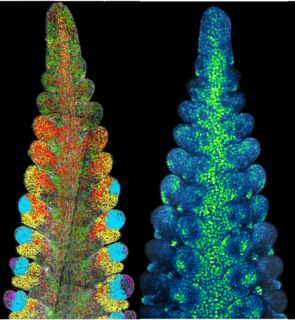
Usadellab / Barvista_ARC
Creative Commons Attribution 4.0 InternationalEarly patterning of organ primordia during barley meristem development uncovered by imputation of gene expression at single cell level.
Updated -
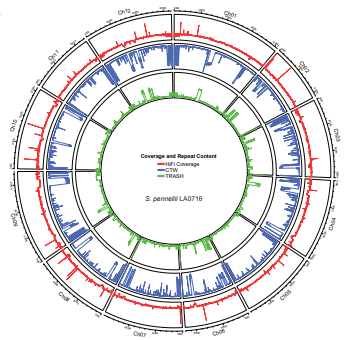
Usadellab / Pennellii_Cheesmaniae_genomes
Creative Commons Attribution 4.0 InternationalChromosome-scale Solanum pennellii and Solanum cheesmaniae genome assemblies reveal structural variants, repeat content and recombination barriers of the tomato clade
Updated